Efficient Communication Training: Sparta
 5 – 100
 5 – 8 h
 on-site or remotely
What Sparta teaches about managing chaos
The Sparta simulation is the natural third step in the business game journey, following Raven 13 and MIR ’91. It focuses on one of the most underestimated and at the same time critical challenges in organizations: managing chaos.
Each simulation in the series shows a different aspect of how organizations operate.
In Raven 13, teams learn how to perform under pressure. They experience how important clear roles, communication, and fast decision-making become when situations are no longer predictable.
MIR ’91 moves this perspective to a higher level. The focus is no longer only on delivering a task, but on how the organization works as a system. Participants start to see projects as tools for change. They learn how to structure initiatives, choose the right approach, and understand how decisions impact the whole system.
Sparta begins where even well-structured organizations start to feel overloaded. At first glance, everything seems to work. Projects are running, teams are active, decisions are being made. But the volume of information grows, exceptions increase, and more and more things require attention. At some point, the question is no longer whether something is done. The real question becomes whether anyone still understands what is happening.
This is the point where chaos appears.
Sparta helps teams see and understand this moment. It shows that chaos is rarely the result of a lack of competence. Much more often, it comes from system overload, lack of mechanisms to filter information, and adding more solutions where simplification is needed.
As a result, participants start to see the organization not as a set of tasks and people, but as a system that can operate either in a conscious or reactive way.
And this leads to a key question: Are we in control of our organization, or are we trying to keep up with the chaos we create ourselves?
How team performance changes after Sparta
-

Control over chaos
-

Clear priorities
-

Effective collaboration
-

Stable delivery momentum
How the Sparta simulation works
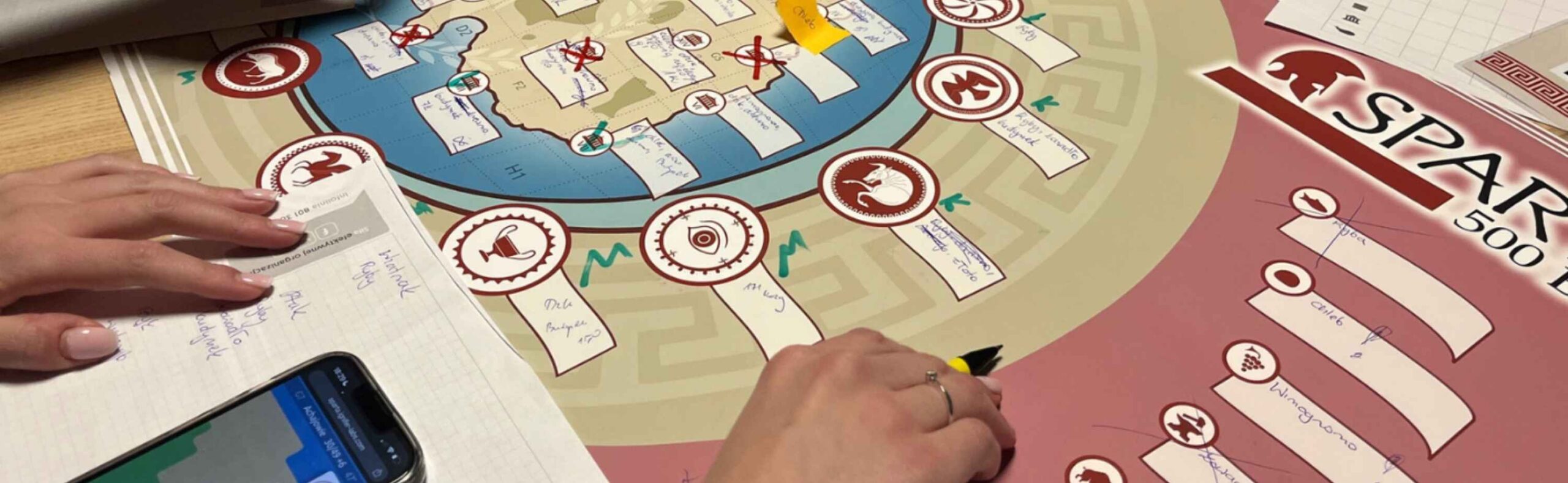
Sparta is a simulation set in an ancient state on the edge of collapse. After a series of disruptions, the system falls into chaos. Shortages appear, social tension rises, and uncertainty grows. Cities face unrest, leaders struggle to maintain control, and the stability of the system begins to weaken.
In this environment, participants take on roles responsible for restoring stability. At first, the tasks seem manageable. However, as the simulation progresses, the situation becomes more complex. More information appears, dependencies increase, exceptions multiply, and time pressure builds with each round.
At a certain point, participants experience a very specific state. Things still move forward, but they are no longer clear or predictable. The system continues to operate, yet control becomes harder to maintain. This is the moment when the organization enters chaos.
The simulation reflects this dynamic with high accuracy. It shows how easily clarity is lost under pressure and complexity, how decisions become less precise, and how the natural reaction is to add more actions instead of simplifying the situation.
In later stages, participants work to regain control. They start to structure their thinking, separate what matters from what creates noise, and look for root causes instead of reacting only to symptoms. Over time, they discover that effectiveness does not come from doing more, but from creating clarity and reducing unnecessary complexity.
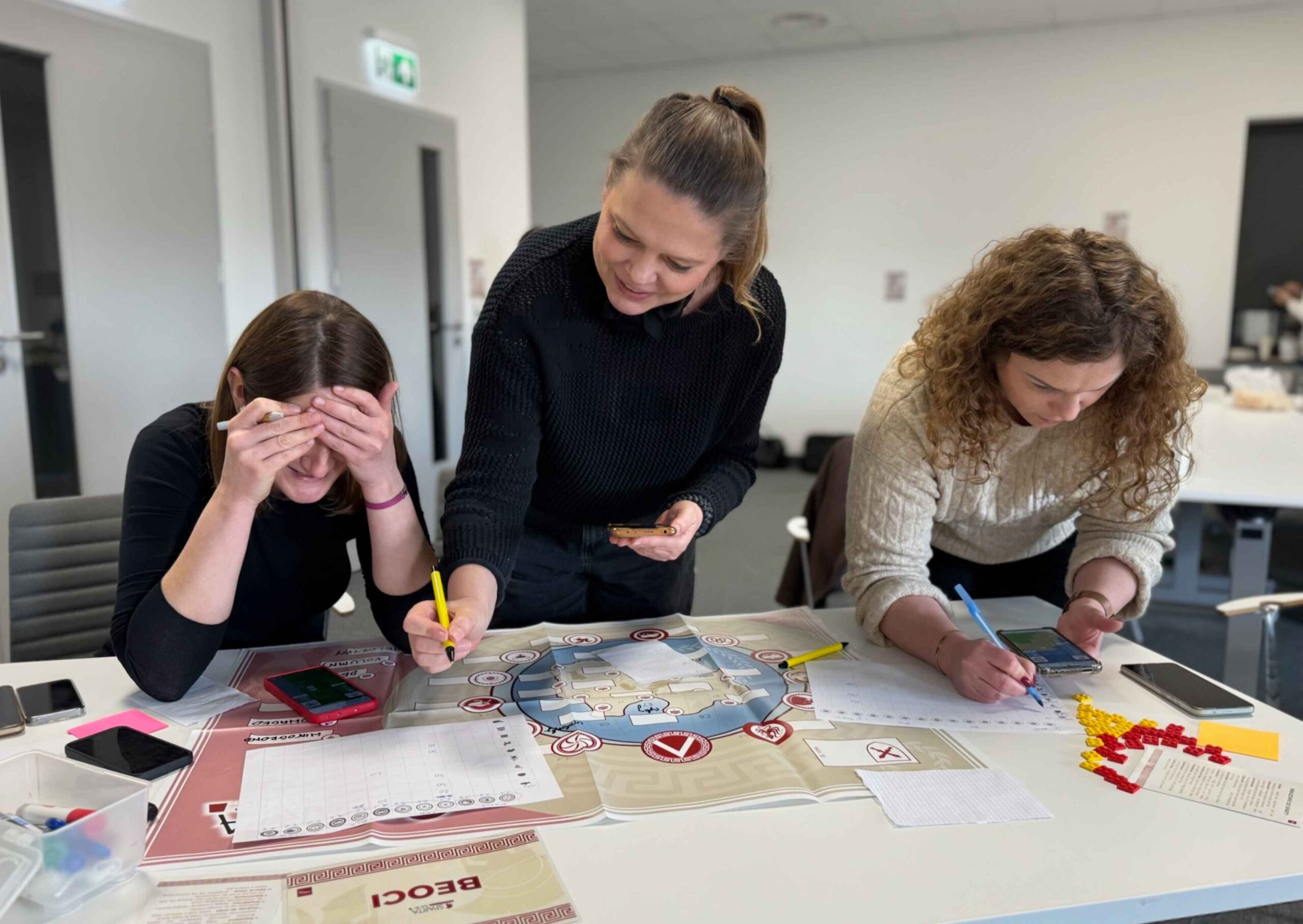
Sparta shows that chaos is not random and not inevitable. It is a result of how the system operates, which means it can be understood and managed.
As a result, participants do not only engage in a dynamic and demanding experience. They also understand what it means to lead in a situation where control is lost and what actually helps to regain it.
Communication in complex environments
In situations where organizations face chaos, interpersonal communication becomes one of the most important tools for leaders and teams. Effective communication is not only about sharing information quickly. It is about building relationships that support collaboration. Strong communication skills, including active listening and mutual understanding, help teams stay aligned and find solutions even in demanding situations.
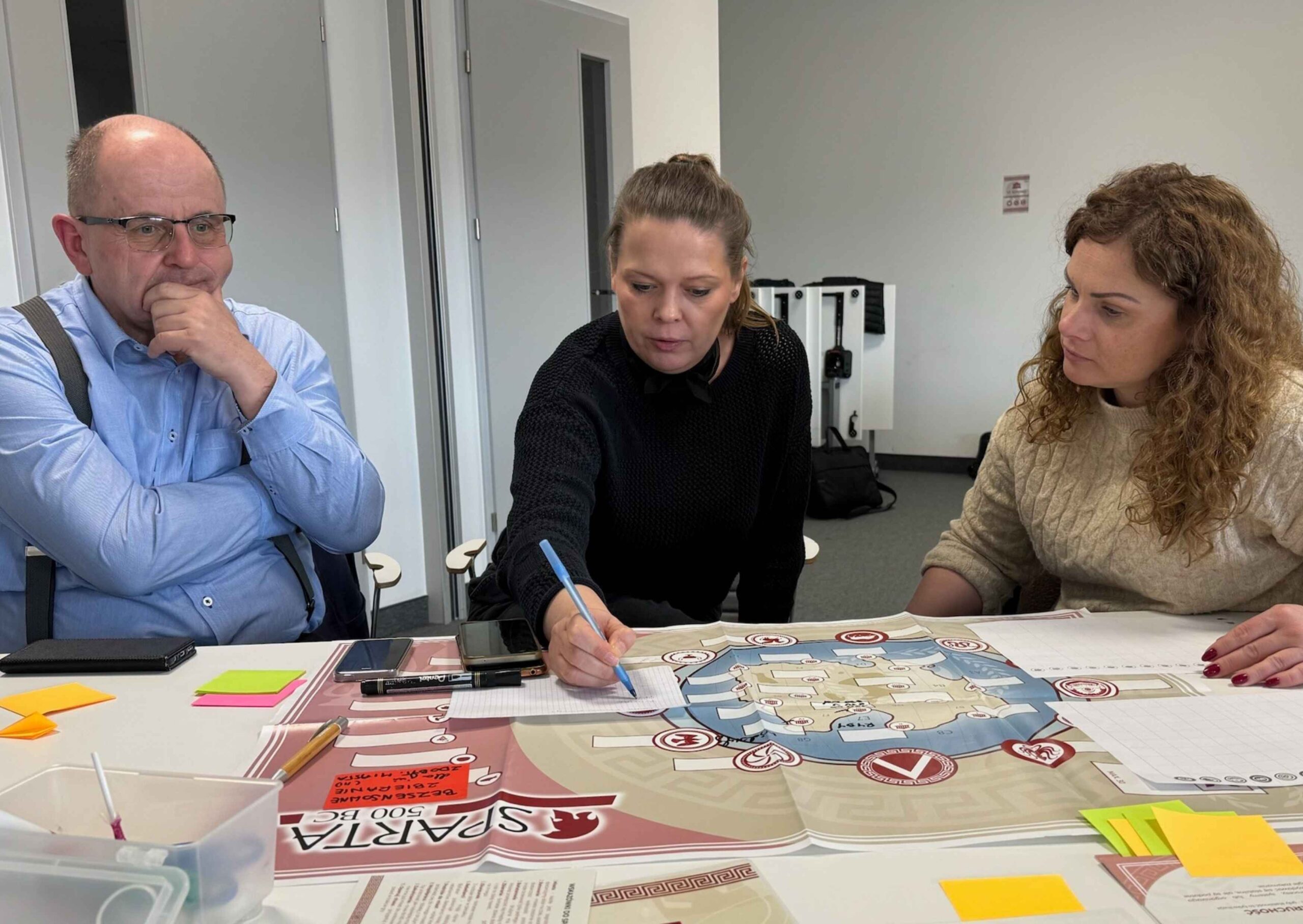
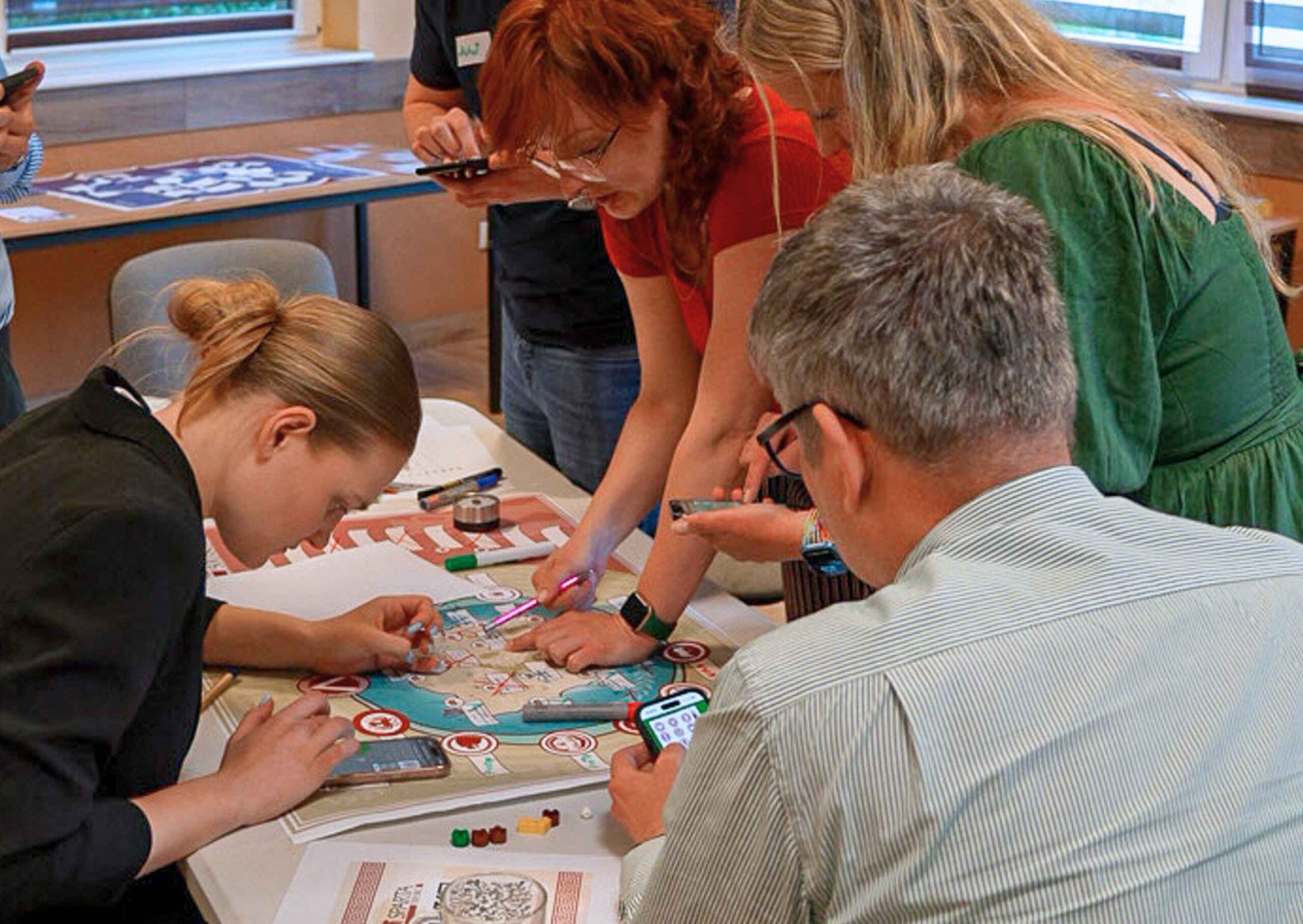
Practical exercises during the training allow participants to experience how communication impacts teamwork and outcomes. They do not focus only on theory. Participants see how open dialogue, sharing information, and listening to others improve collaboration and help identify the real causes of problems.
Building trust, respect, and open communication strengthens the team and increases resilience. Effective interpersonal communication supports conflict resolution, improves cooperation, and helps teams reach shared goals faster. As a result, organizations are better prepared to handle uncertainty and can move forward with greater clarity and confidence.
Systems thinking, quality, and simplification
Sparta places strong emphasis on managing quality as a system capability. It is not about error control. It is about the ability of an organization to maintain stability in conditions of change and growing complexity.
During the simulation, participants start to notice a repeating pattern. The natural response to chaos is to add more actions, tools, and communication. The experience of the game shows a different path.
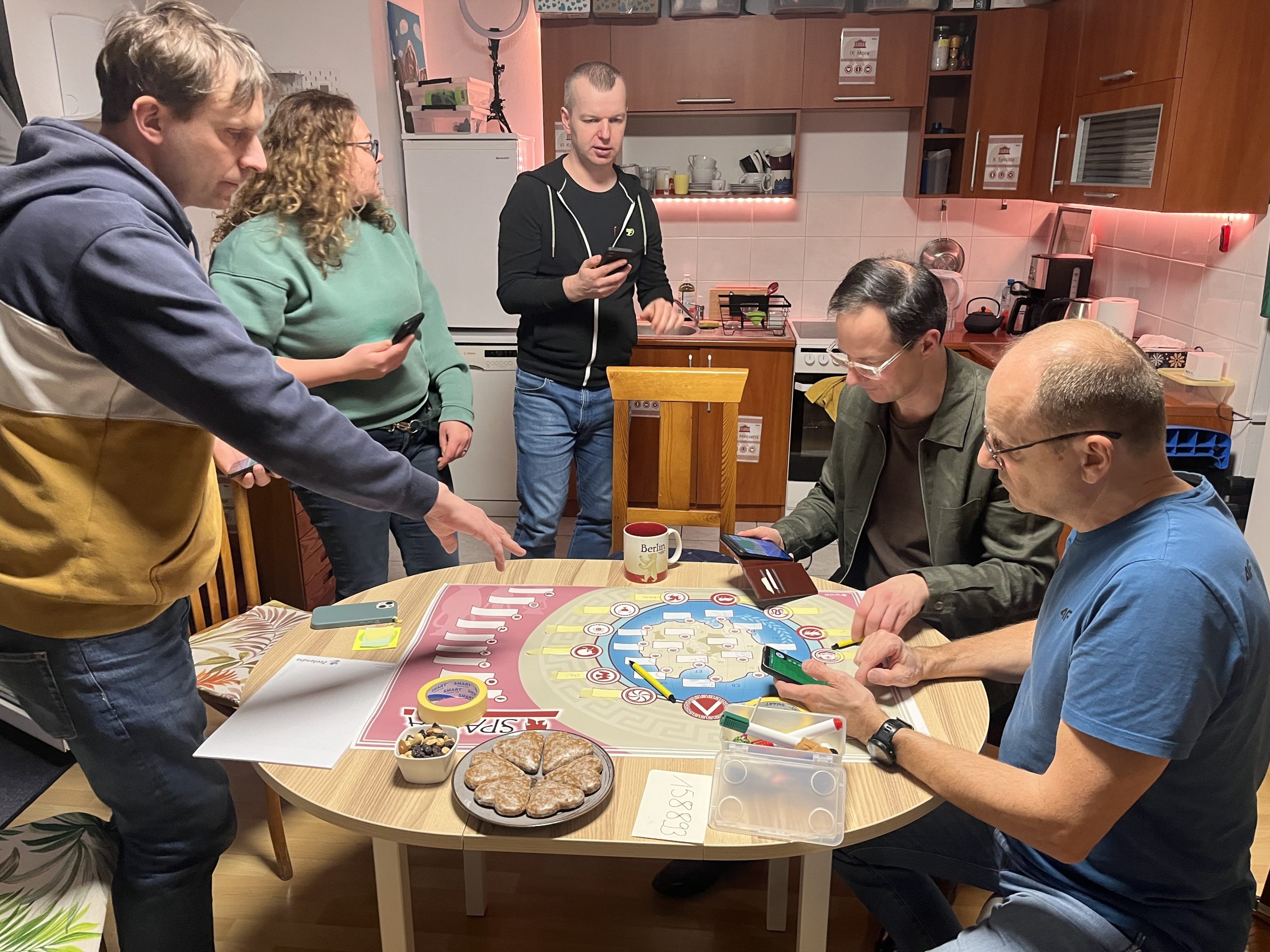
Participants discover that:
- more tools do not create more order
- more communication does not always create better understanding
- more initiatives do not lead to better results
This leads to a key insight. Organizational effectiveness does not come from doing more. It comes from the ability to simplify and structure how the system works.
As a result, a core leadership capability becomes the ability to simplify without losing effectiveness. Participants learn how to design solutions that reduce complexity rather than increase it. They focus on building structures that support action and introduce working rhythms that bring stability.
In practice, this means designing ways of working that capture chaos early, before it spreads. It also requires conscious decisions about what to stop doing in order to restore clarity and pace.
This is the shift from managing individual actions to managing the system as a whole.
Applying tools and methods in practice
A key outcome of the training is the ability to use tools and methods in real work. Participants leave the workshop better prepared to apply new communication skills in their teams. This leads to clearer communication, stronger collaboration, and more durable working relationships.
Implementation starts with understanding the organization’s goals and challenges. This makes it possible to adapt tools to the specific team context. As teams start using these approaches in meetings, decision-making, and difficult conversations, communication becomes more effective and teamwork improves.

Over time, clear communication and strong relationships become part of how the organization operates. This translates into better business outcomes. By applying these tools in practice, participants increase their effectiveness and help build stronger, more resilient teams.
Key benefits
- Ability to name and understand chaos
Teams break chaos down into clear elements and define a way forward. - Better information filtering
The organization learns to separate signal from noise. - Focus on root causes
Less firefighting, more solving the real sources of problems. - Conscious simplification
Leaders remove what is unnecessary instead of adding more. - Clear decision structure
Clarity on what is operational, tactical, and strategic. - Greater organizational stability
The system becomes more predictable, even under pressure. - A shared language for talking about chaos
Teams gain tools to discuss problems without adding emotional noise.
Who should attend sparta training
Sparta is designed for:
- team leaders and mid-level managers,
- organizations that have completed Raven 13 and MIR ’91 and want to go deeper,
- companies that have delivered a lot but now experience overload and chaos,
- teams operating in dynamic, fast changing environments.
It is especially relevant when:
- everything seems to work, but it requires too much effort,
- there is an overload of meetings, tools, and communication,
- decisions are unclear or inconsistent,
- people feel overwhelmed by the volume of information.

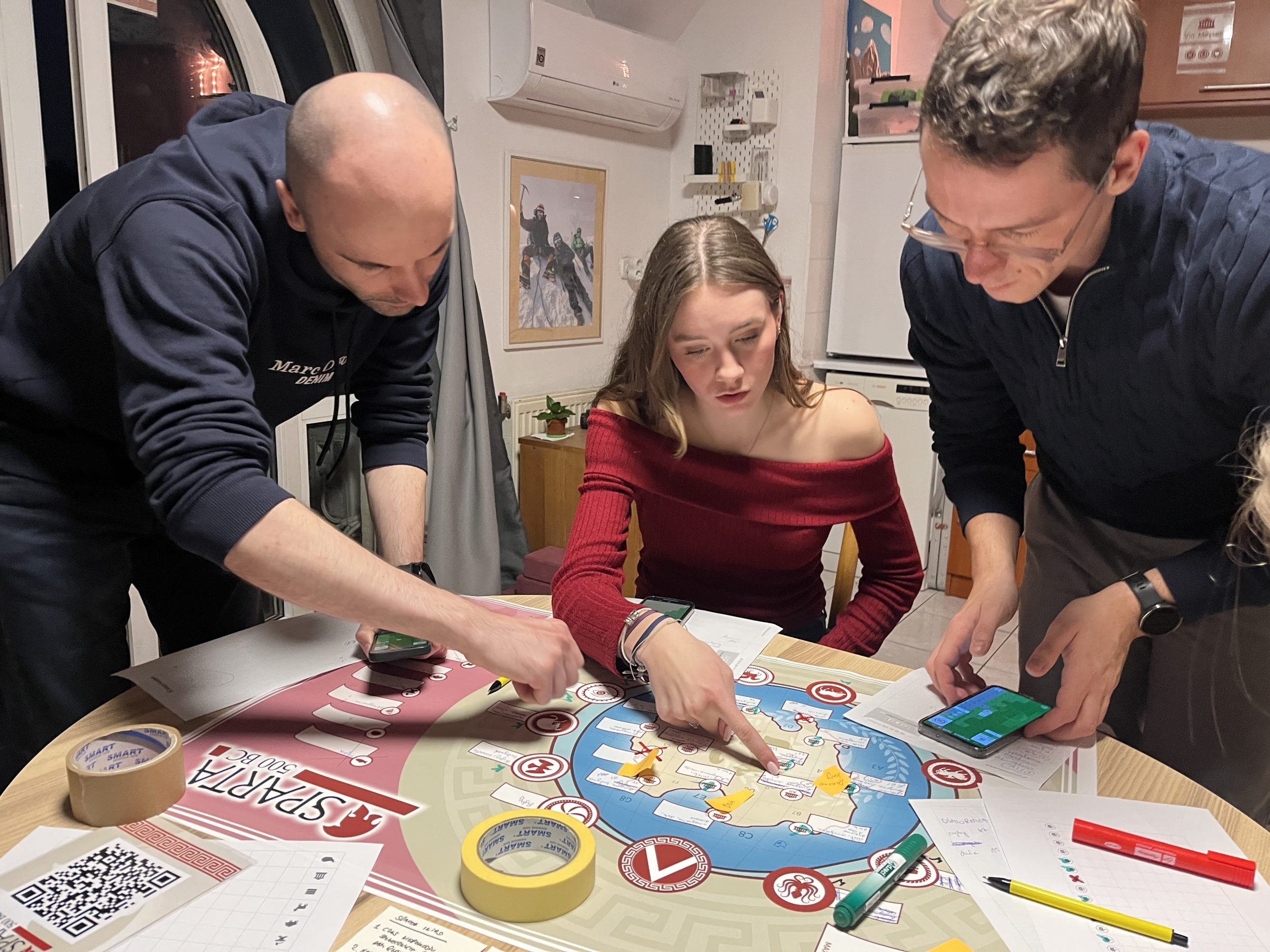
About the facilitator
I am a trainer and management practitioner with extensive experience working with teams in high pressure, complex, and rapidly changing environments. I design and deliver business simulations where participants not only learn tools, but experience how a team system works and when it starts to become overloaded.
In my work, I combine the realities of project management with the dynamics of simulation. This helps teams regain control, simplify how they operate, and make better decisions in complex situations.
I hold certifications in project management, including PMP, PRINCE2, IPMA, Scrum.org, and AgilePM, which confirm my expertise and knowledge of best practices.
For over 15 years, I have managed projects in Fortune 500 organizations such as Hewlett-Packard and Mondelez International.

Let’s talk about your context
Sparta, like Raven and MIR, is not a one size fits all training.
Each engagement is tailored to the real level of chaos and the challenges your organization faces.
You may recognize this situation:
- a lot is happening, but it is hard to stay in control,
- the system starts to feel unstable,
- people are capable, but overloaded,
In many cases, the issue is not a lack of another tool. What is needed is system simplification.
Let’s talk and see if Sparta is the right next step.
Let’s see if Sparta Is right for your organization
Let’s assess together whether Sparta is the right approach for your context and how it can deliver the most value.
Contact me!