Agile Project Management Training: LEGO® CITY
 5 -30
5 -30
 8 h
8 h
 on-site
Agile Project Management in Practice with Lego® City
In many teams, the issue is not a lack of engagement or skills. The challenge lies in how work is organized and how project goals are executed. Planning cycles are too long, decisions come too late, priorities shift during delivery, and despite significant effort, results often fall short of expectations. At a certain point, it stops being about people and starts being about the approach and overall effectiveness.
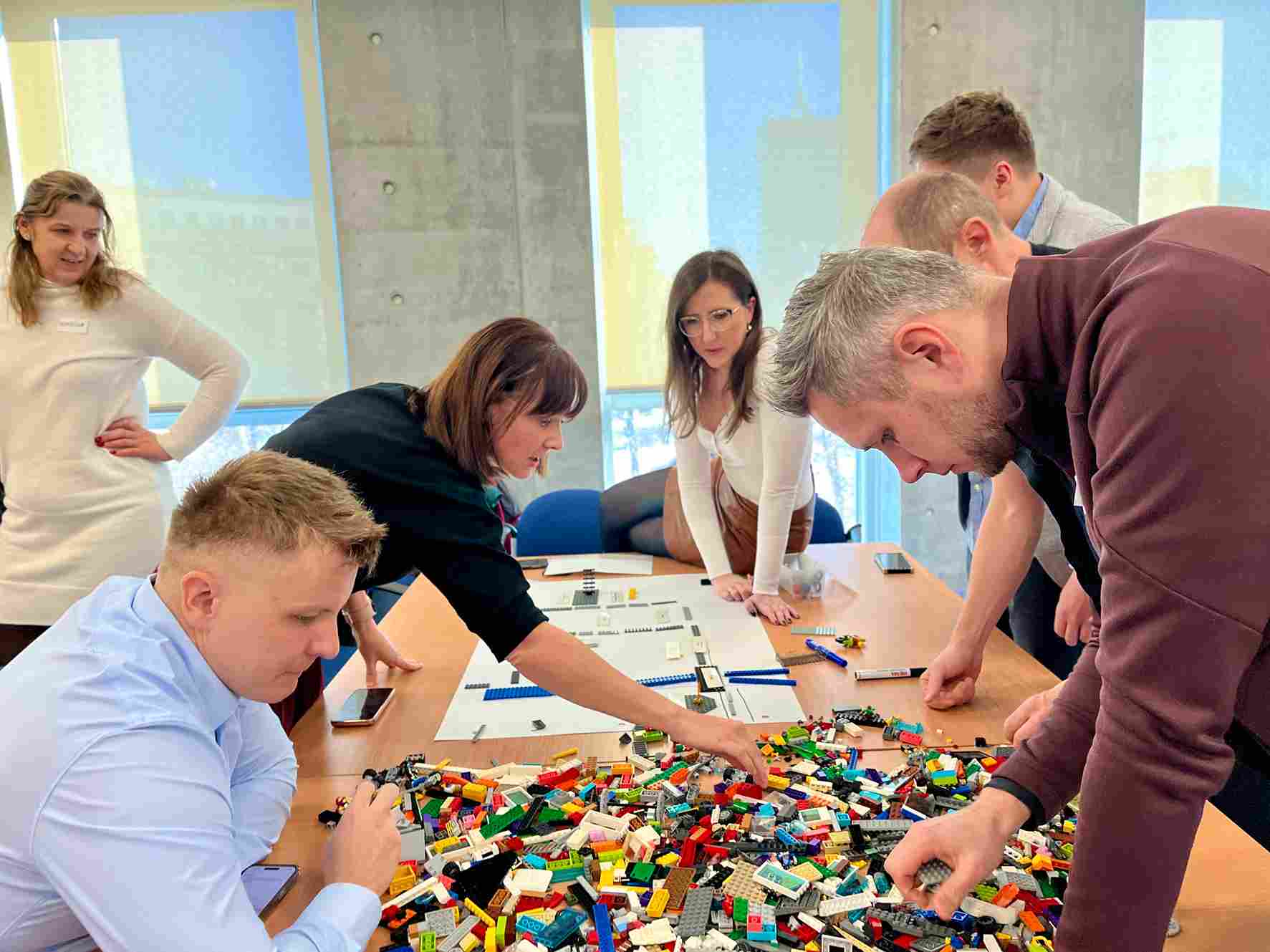
This training addresses exactly that moment. The goal of the workshop is to improve team effectiveness by introducing agile project management in practice. It shows how teams can work smarter, respond faster to change, make decisions closer to execution, and reduce the gap between ideas and results. The focus is not on introducing new tools or terminology, but on changing how teams think about work, ownership, and value creation. Participants gain a clear view of how work actually happens and where time and effort are lost. They see why some decisions do not deliver expected results and how small changes in the way projects are run can significantly improve speed and quality of outcomes.
This is the moment when teams move from managing projects to consciously building results step by step, closer to the customer and with greater control over what truly matters. The Agile approach is based on values such as flexibility, collaboration, adaptability, and continuous improvement, helping teams respond more effectively to changing needs and challenges.
As a result, teams increase effectiveness, develop better solutions to problems, and adapt faster to new conditions. This approach supports capability development and more consistent delivery of project goals.
What changes within the team after completing agile project management training?
-
Cross-Team Alignment
-

Faster Decision-Making
-

Stronger Collaboration
-
Clear Progress Visibility
What’s included in the Lego® City training program
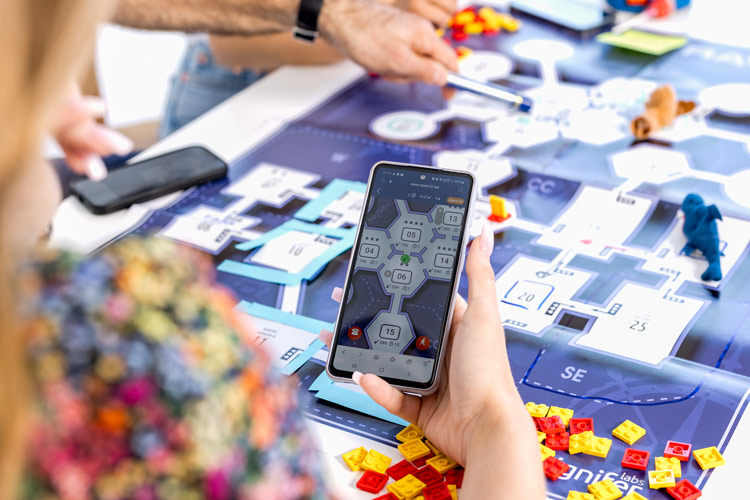
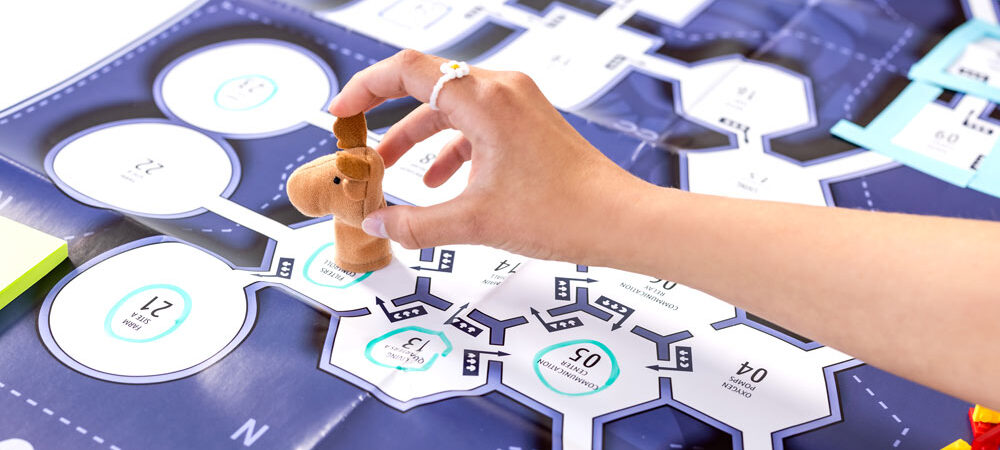
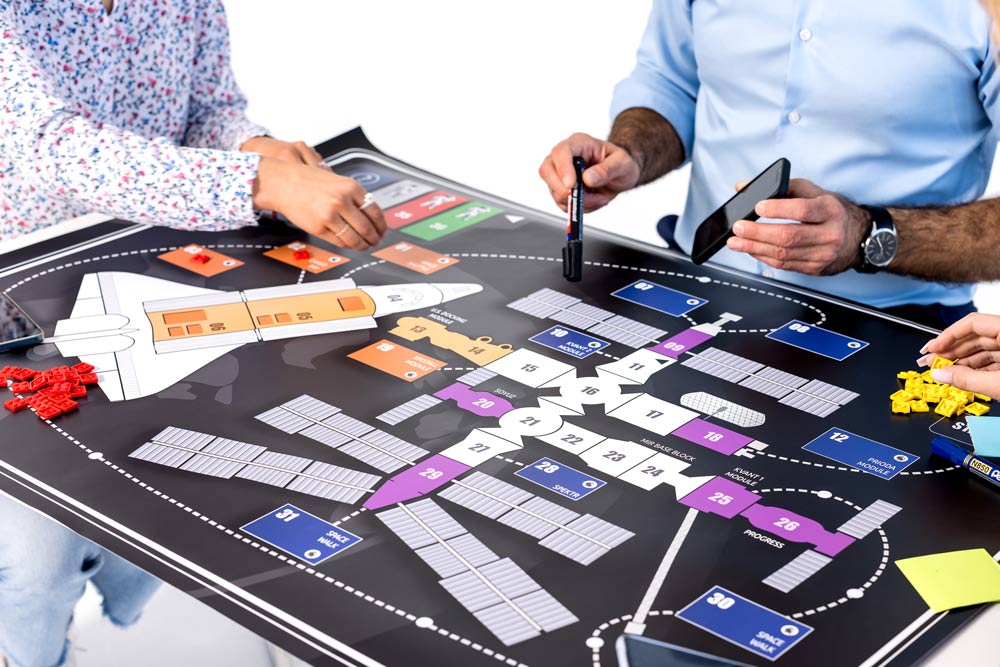
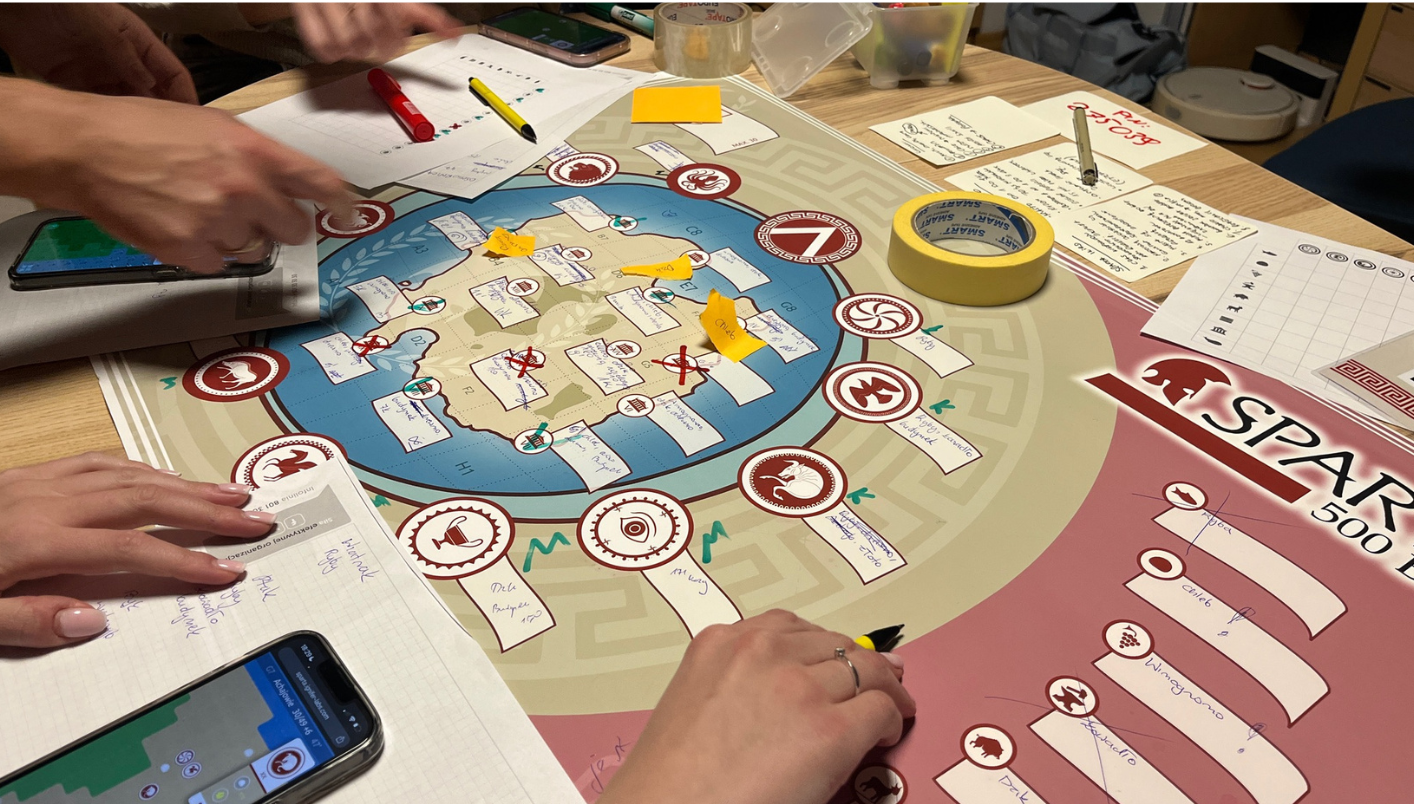
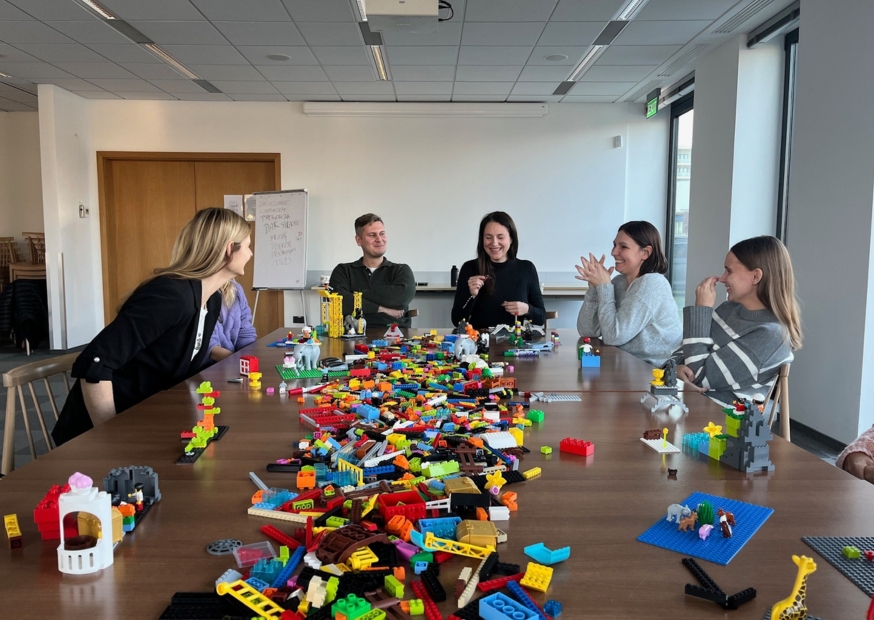
The training is based on building a shared city using LEGO® bricks, which becomes a metaphor for a real product and team collaboration. During the workshop, participants design and build city models, developing practical skills in agile project management. The LEGO® Scrum format allows teams to experience the Scrum process and agile principles in practice, while also working on shared values and solving problems across different areas of the project.
Participants present their results, define direction, and develop strategy while working under time pressure. They make decisions, set priorities, and learn how to use available resources effectively. With each iteration, they improve how they communicate expectations, align with decision-makers, and respond to changing needs and new ideas.
Teams usually work in groups of 4 to 6 people, responsible for building the city together. As the city evolves, so does team awareness. Participants better understand what defines a valuable outcome, how to maintain quality, and how to focus on what matters most. They also experience real tensions between time, scope, and expectations, and learn how to navigate conversations that move work forward instead of blocking progress.
How the scrum-based workshop works
During the workshop, participants learn how to build and manage a backlog, use a Kanban board, plan sprints, and write user stories. Sprint planning focuses on selecting work from the backlog for a given cycle, while the Kanban board provides clear visibility of progress. User stories describe work from the perspective of the end user, and the Product Owner defines the vision and manages priorities.
Work is organized into short iterations called sprints. At the end of each sprint, the outcome becomes more complete and functional. This approach helps teams stay flexible, adjust priorities, and deliver value step by step.
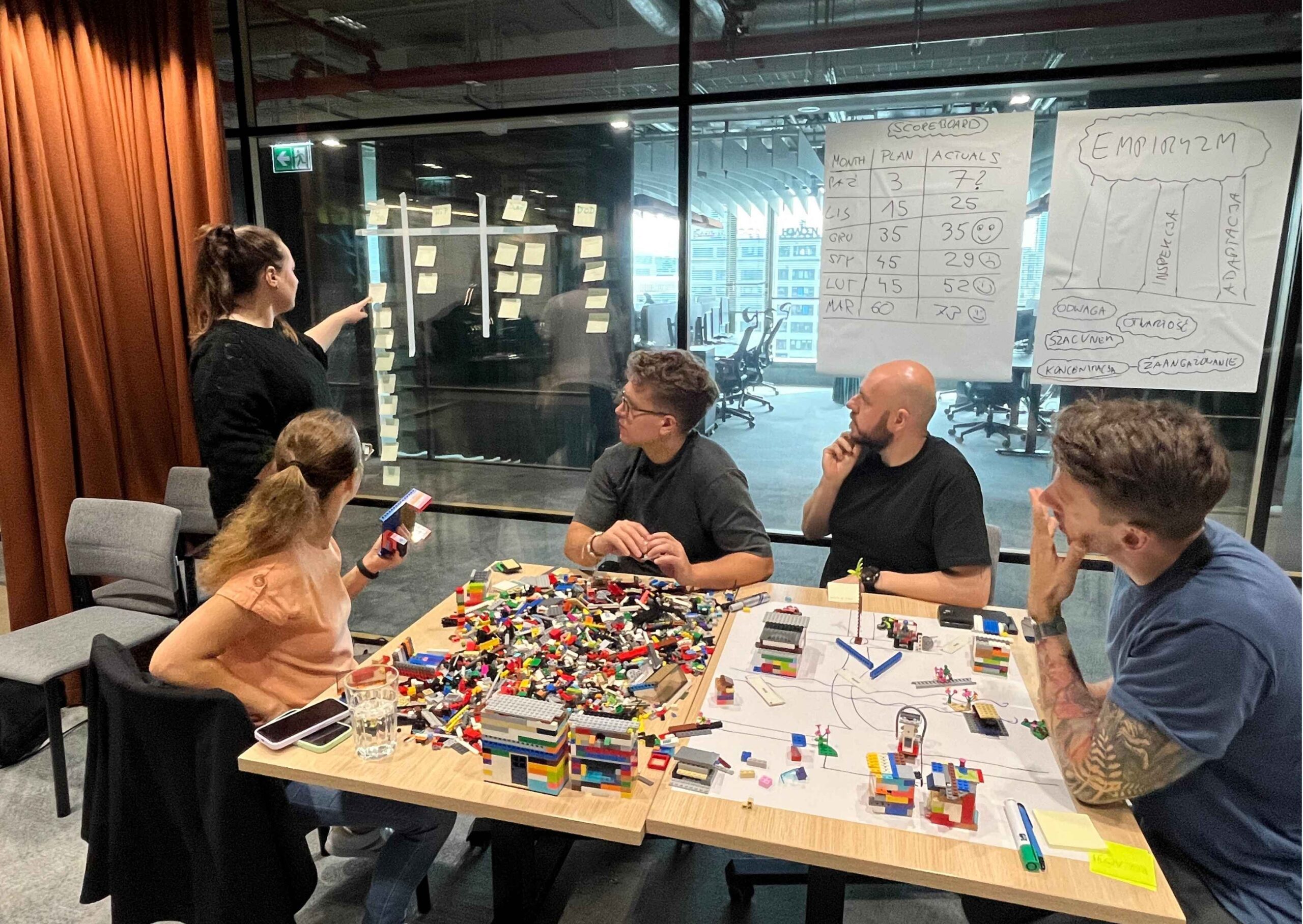
The workshop is an effective way to develop strategy, strengthen teamwork, and solve real problems across different industries. It is based on learning through experience and collaboration, which reflects how modern organizations operate. Participants present results, build shared understanding, and develop team capabilities. The Lego® City workshop provides hands on experience of Scrum roles, the delivery process, and ways to improve team effectiveness.
Waterfall vs. Agile Project Management
Waterfall project management follows a linear and sequential process. Work is planned upfront, and phases are completed one after another. This approach provides structure and control, but it can reduce flexibility when requirements change and may extend delivery timelines.
Agile project management, including Scrum, is based on short iterations called sprints. Each cycle delivers a usable result, and teams adjust their approach based on feedback and changing needs. This allows for faster value delivery, earlier feedback from users, and better response to evolving requirements.

Learning Through Action
The key shift in this training is moving away from trying to predict everything upfront and focusing on learning through action. The learning process is based on an iterative Scrum approach, where each cycle helps teams find better solutions and improve how they deliver projects. Participants work with proven models while also developing their own solutions, regardless of their prior experience. This creates space to build real competence in planning and project management.
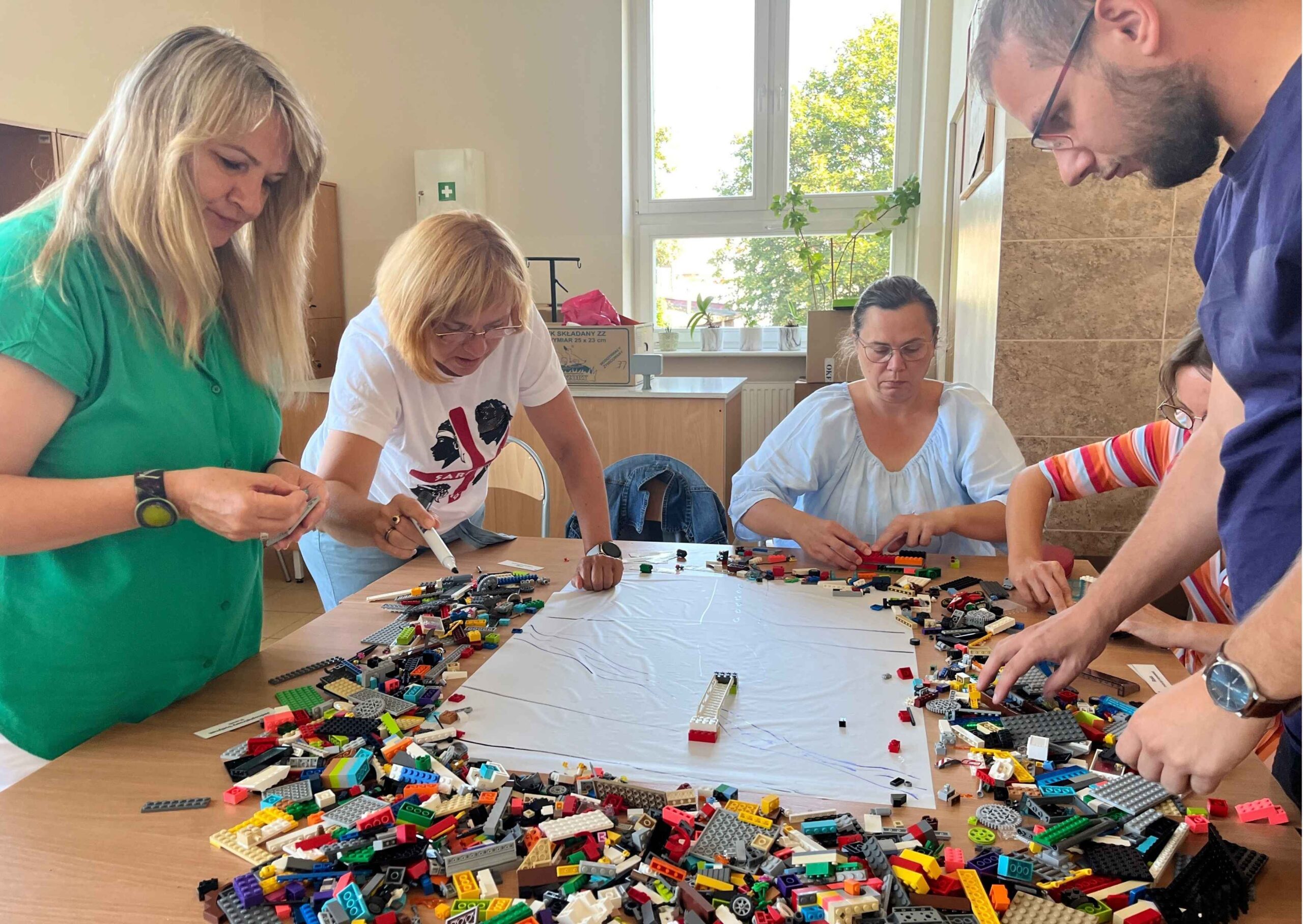
The workshop includes simulations and practical exercises that increase learning effectiveness and improve understanding of team roles in Scrum. Participants test ideas in practice, observe outcomes, and adjust their approach in real time. This supports faster response to emerging challenges and better decision-making.
This approach builds agility, flexibility, and confidence in action. Collaboration and communication play a central role, regardless of team structure or location. Teams learn how to have direct conversations, share insights, and work together to find better solutions instead of sticking to initial assumptions. As a result, work becomes more focused, simpler, and aligned with what truly creates value, while agility supports effective delivery and continuous team development.
Key benefits
- Rapid Results Delivery
Project speed and efficiency improve through an iterative Scrum approach that enables quick delivery of outcomes and continuous improvement. Teams move away from waiting for the perfect moment and start delivering in short cycles, reducing overall delivery time. - Better Decisions in Execution
Teams make decisions based on real data and observation. Instead of trying to predict everything upfront, they use practical tools that reduce errors and accelerate progress. - Clarity on What Matters Most
Teams focus on what delivers the highest value at a given moment. Priorities become clearer, which supports more effective planning and execution. - Stronger Ownership
Team members better understand their responsibilities and how their decisions impact results. This builds accountability and strengthens team capabilities. - Clear Communication
Teams communicate expectations, challenges, and progress in a direct way. This reduces misunderstandings and improves transparency. - Ability to Adapt to Change
Change becomes a natural part of the workflow. Teams adjust quickly without disruption, supported by an iterative Agile approach. - Simpler, More Focused Ways of Working
Teams eliminate unnecessary activities and focus on what truly matters. The result is less complexity and more consistent delivery of value.
Using LEGO bricks during the workshop, participants build models, present results, and develop practical skills. This hands on approach supports shared understanding, problem solving, and improved effectiveness across different business contexts.
Who Should Attend Lego® City Training
This training is designed for:
- project teams that want to work faster and more consciously,
- team leaders and managers looking for a simpler way to run work,
- organizations that are growing and need more flexibility in execution,
- teams working closely with clients where change is constant,
- companies that want to move away from excessive planning toward real outcomes.
It is especially relevant when:
- a lot is happening, but progress is hard to see,
- teams work intensively, but results come with delay,
- priorities change frequently and are hard to follow,
- decisions are delayed or unclear across the team,
- there is tension between quality, timelines, and client expectations.
Agile is especially effective in environments with high uncertainty and changing requirements, making it a practical and versatile approach across different industries.

About the Facilitator
I am a trainer and management practitioner specializing in working with teams that create and develop products in fast changing, complex environments. I support organizations in moving from rigid planning to more flexible, value driven ways of working, based on continuous learning, feedback, and delivery of results.
I have worked both in large international organizations and in smaller, dynamic teams building new solutions across services, technology, and R&D. This allows me to combine structured management approaches with iterative product development, experimentation, and close collaboration with clients.

I hold certifications in project management and agile methods, including PMP, PRINCE2, IPMA, Scrum, and AgilePM, which confirm my ability to work across both structured and adaptive approaches.
For over 15 years, I have managed projects and supported teams in organizations such as Hewlett-Packard and Mondelez International.
Let’s Talk About Your Context
Each engagement is tailored to how the team actually works, its challenges, and the organization’s level of maturity.
You may recognize this situation:
- a lot is happening, but it is hard to turn it into clear results
- work is moving forward, but there is no clarity on what really matters
- teams are engaged, but often work side by side rather than together
- decisions come too late or keep being revisited
- change happens faster than plans can keep up
In many cases, the issue is not a lack of tools or a more detailed plan. What is needed is a simpler, more conscious way of working.Let’s talk and see if this training is the right next step for your team.
Let’s See If Agile Training Is Right for Your Organization
Let’s assess together whether Agile is the right approach for your context and how it can deliver the most value.
Contact me!