Training Design Method
Check out how we combine hands-on experience, business games, and practical tools to make our training deliver real results.
Knowledge and Fun
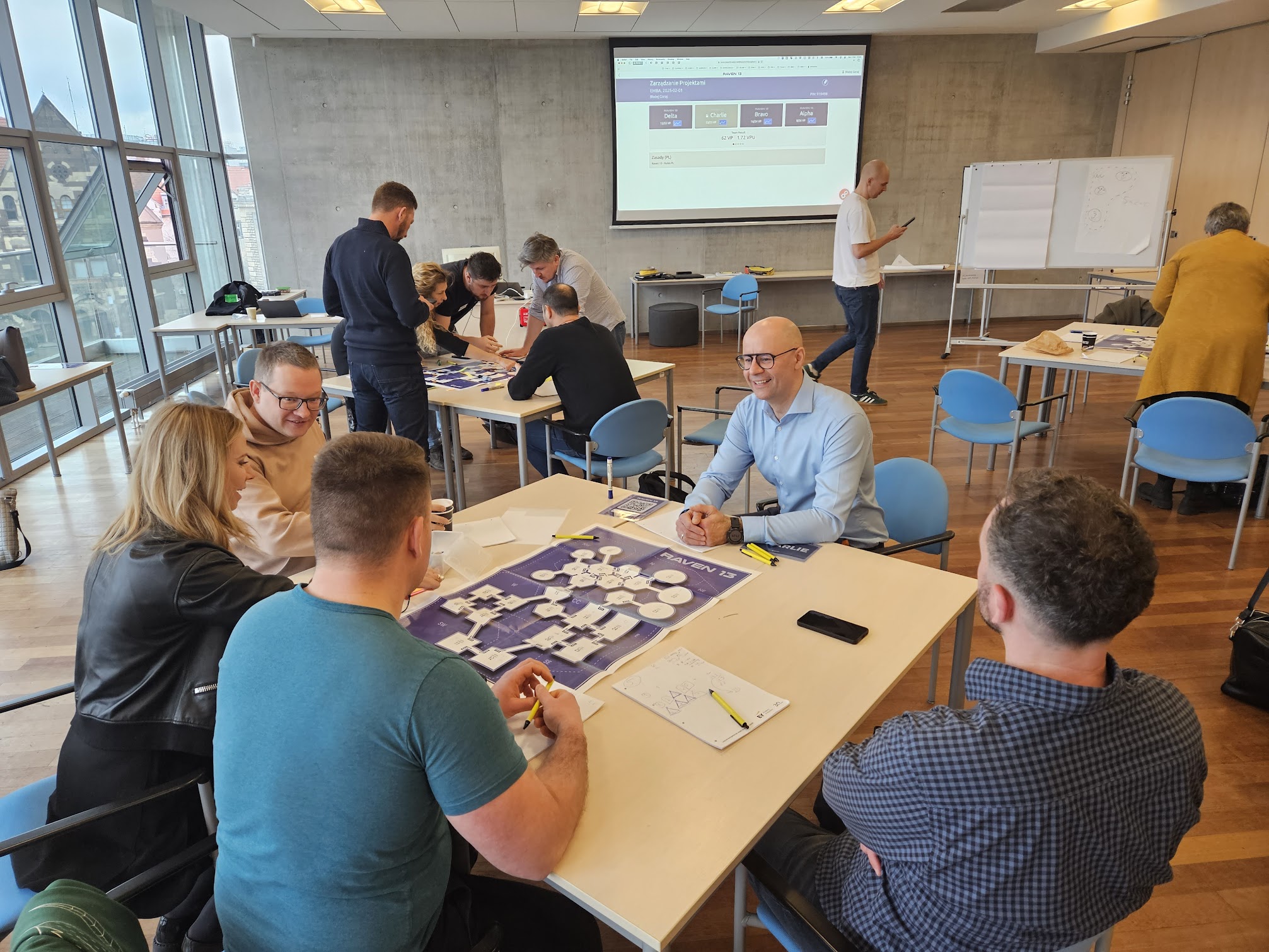
My training recipe is based on the principle of 50% substantive knowledge and 50% engaging business games. The key to my proprietary method is to immerse participants in the experience of a specific problem as quickly as possible. First, they need to feel what it is like to be in a given situation, face it, and find the best solution. In the next part of the training, we analyze the course of the game and the results together. After joint reflection, I present the participants with proven methods and solutions based on specific examples. The participants themselves decide which elements are most useful to them.
Combining practice with theory
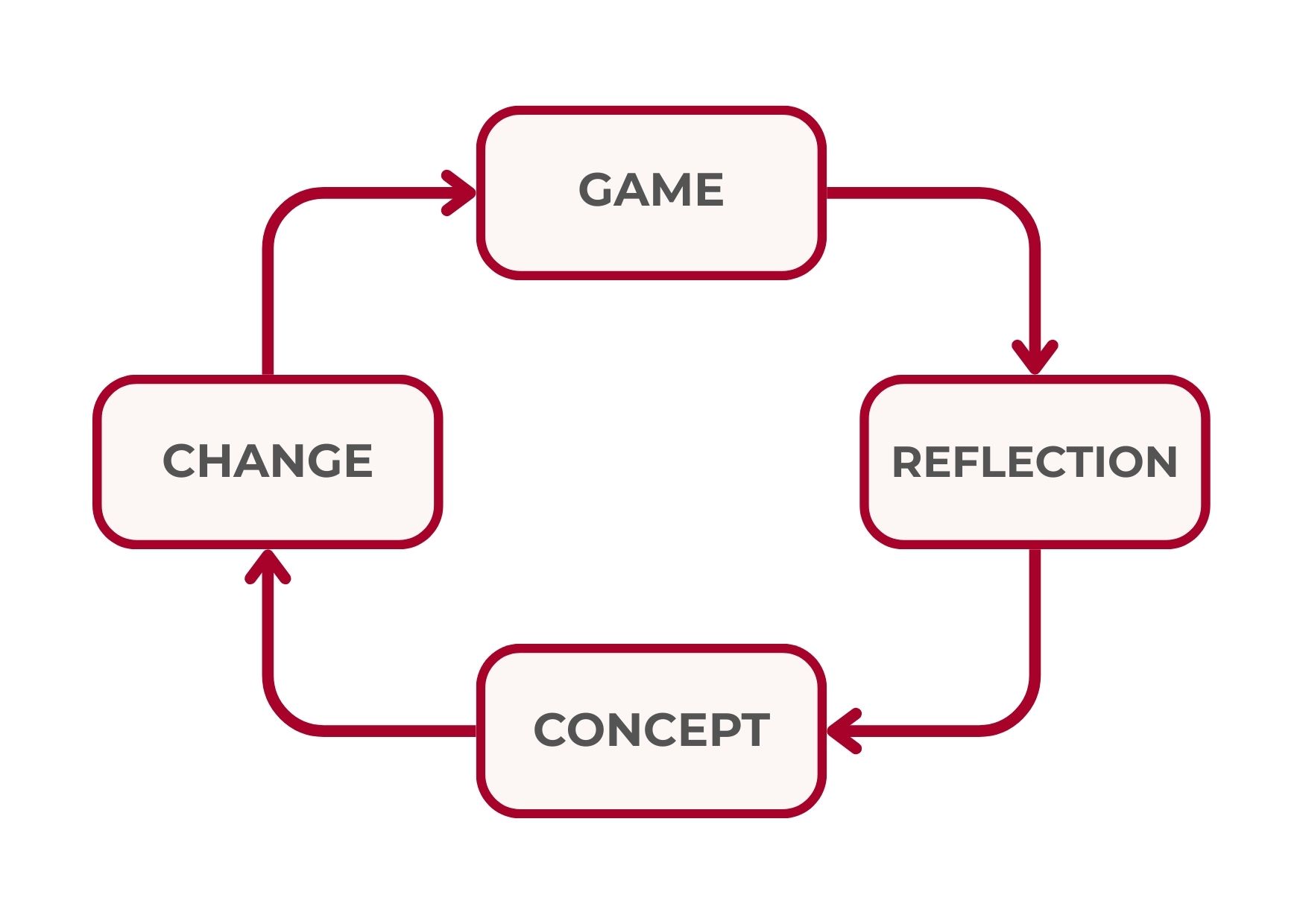
In designing training programs, I rely on Kolb’s learning cycle, a method based on learning through experience. This approach engages both emotions and intellect, ensuring that knowledge stays with participants for the long term.
How does it work in practice?
- GAME: We start with an engaging game. Participants enter a business simulation, making real decisions. They face challenges and work under time pressure, generating emotions and building relationships.
- REFLECTION: After the game, we analyze results, emotions, and mistakes together. Participants compare their professional experience with the outcomes achieved.
- CONCEPT: Here I present methods and problem-solving tools, illustrated with real-life examples.
- CHANGE: This is my signature step. The final stage of development is planning change — focusing on what brings tangible benefits from the training.
Drawing conclusions
In the case of business simulations, we play at least twice to check whether the implemented changes and improvements have a positive impact on the result. The first game is often a collision with reality – a place for experimentation and making mistakes in a safe environment. However, the real learning takes place in the second round. Participants are given the opportunity to immediately implement the conclusions they have drawn and their new knowledge. As a result, they leave the training with a sense of competence and proof that the new strategy works.
Tailor-made
Before I propose a specific training scenario, I start with a conversation. I usually meet online with the team leader to understand the challenges the team faces and the goals they want to achieve.
Only based on this do I select the appropriate training. I look at the broader learning impact, structured around four levels:
- How participants will evaluate the training (satisfaction)
- What participants will learn (knowledge)
- What participants plan to implement in their work (change)
- What the expected business outcome will be (benefit)
Training scenarios are tailored to specific needs. After the training, we organize a follow-up session, where I support the client in ensuring return on investment (planning change and tracking benefits).
Let's meet and discuss your requirements!
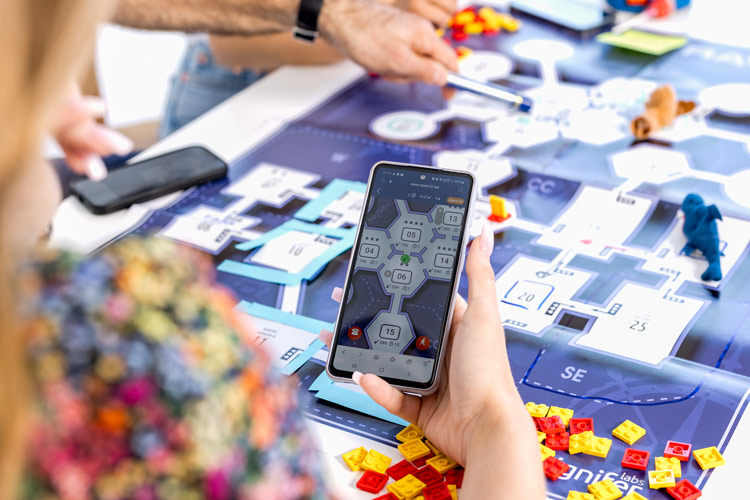
What do participants gain and who are our training courses aimed at?
Our simulations serve as a testing ground for both hard and soft skills. Participants don’t just listen to project management theory – they experience it firsthand. During the workshops, we develop skills in the following areas:
- Risk and change management: How to react when plans fall apart?
- Team communication: How to avoid information silos and collaborate under time pressure.
- Decision-making: Data analysis, task prioritization, and resource allocation.
- Strategic thinking: Understanding how decisions in one department affect the outcome of the entire organization.
Our trainings are aimed at companies that are tired of boring PowerPoint presentations and are looking for real behavioral change in their employees. We welcome:
- Project teams looking to improve collaboration.
- Managers seeking new management tools.
- Organizations implementing new work methodologies.
Why it matters?
Because we teach through mistakes that don’t cost anything. Failing in a simulation is a valuable lesson that in real business could cost the company thousands. We provide a space to “turn a project upside down” in the training room so that in real work, participants can execute it flawlessly.


Alexandru Campean
Deputy DPO
Blaze’s training style brilliantly blends structured learning with interactive games, creating just the right balance between guidance and individual or group creativity. I’m a firm believer that work done with a smile is always better, and Blaze’s use of board-game dynamics to build collaboration within our Legal team was nothing short of genius.
Information about the trainer
My name is Blaze Goraj and I am a trainer, management practitioner, and one of the most experienced game masters conducting business simulations in Poland. In my work, I combine two worlds: the harsh realities of corporate projects and the engaging mechanics of simulation. I don’t believe in boring lectures. I believe in education through experience.
For years, I have been active in the world of project management as one of the industry’s experts, conducting project management courses and sharing the rich experience I have gained during the implementation of numerous projects. I am certified in project management, including PMP, PRINCE2®, IPMA, Scrum.org, and AgilePM, which confirms my competence and knowledge of best practices.
Before I started designing and running simulations, I managed projects for over 15 years within Fortune 500 giants such as Hewlett-Packard and Mondelez International.